Action Windows Are Inherently Temporal: A Benchmark for Time-Sensitive Robotic Manipulation
University of Science and Technology of China
Abstract
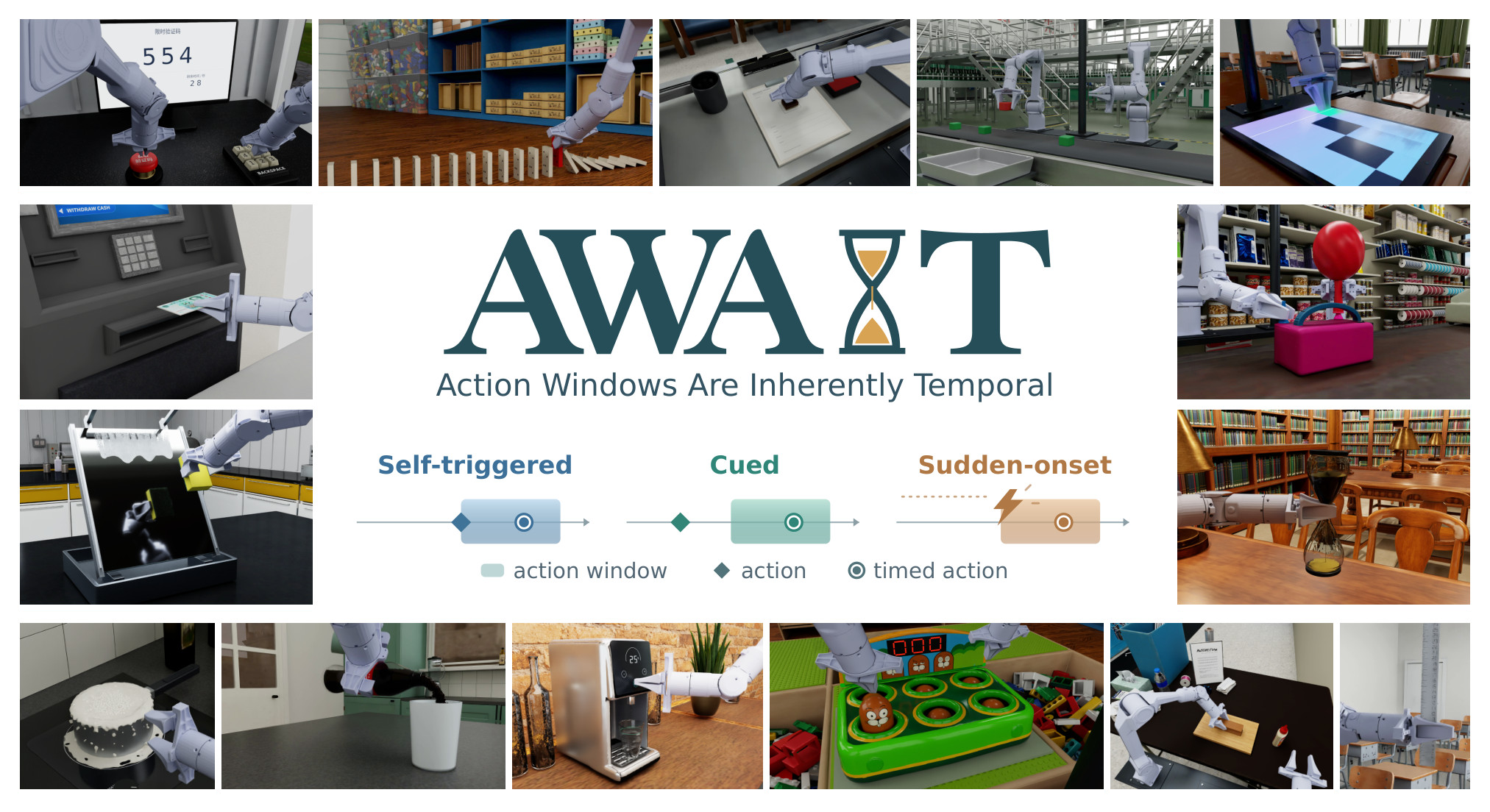
Vision-language model (VLM) agents have surpassed learned-policy baselines on existing robotic manipulation benchmarks. However, these agents still struggle with time-sensitive everyday tasks that existing benchmarks for VLM agents cover only partially. In these tasks, evolving physical processes create finite windows for successful intervention. These action windows are inherently temporal and impose a shared time budget on decision making and physical execution. Coordinating intervention within this budget requires agents to determine when the window opens. We introduce AWAIT, a simulation benchmark that evaluates task completion within action windows while accounting for decision and execution time. Our evaluation reveals difficulties in recognizing window onset and shows that successive decisions and movements can exhaust an action window even when each decision takes less than the window duration.
Video gallery
Browse by how the action window opens, or compare tasks across scenes.
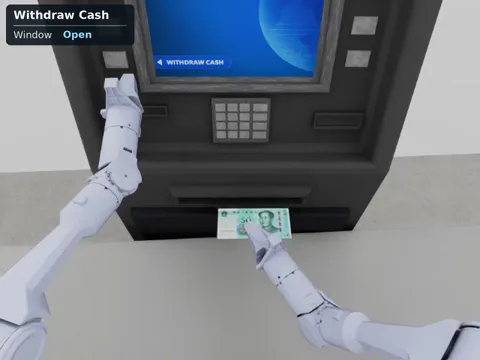
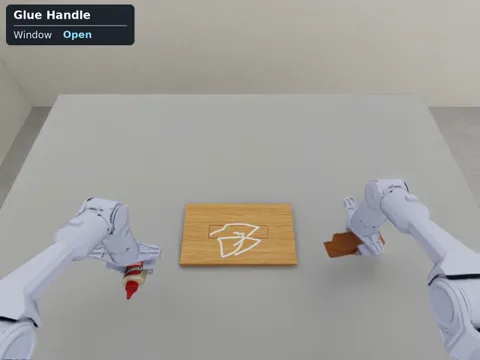
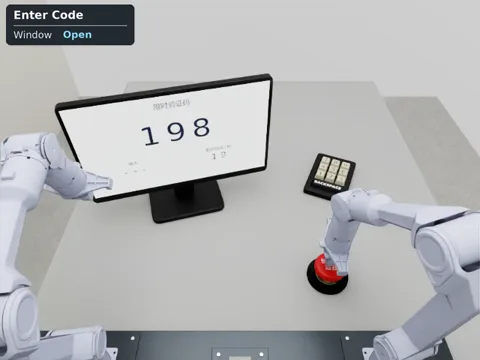
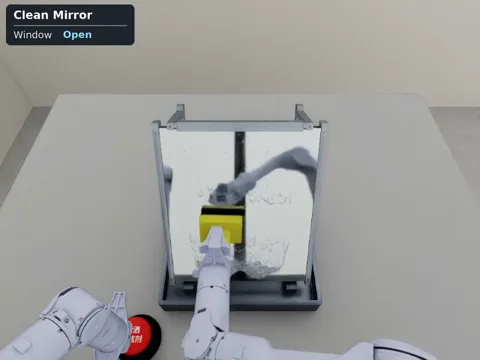
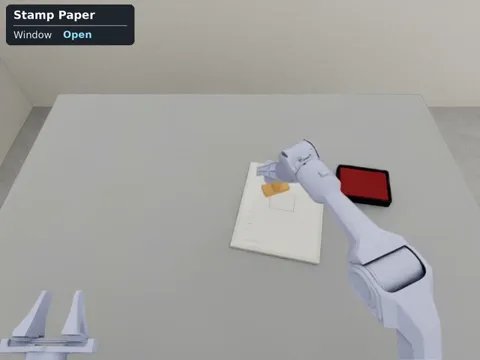
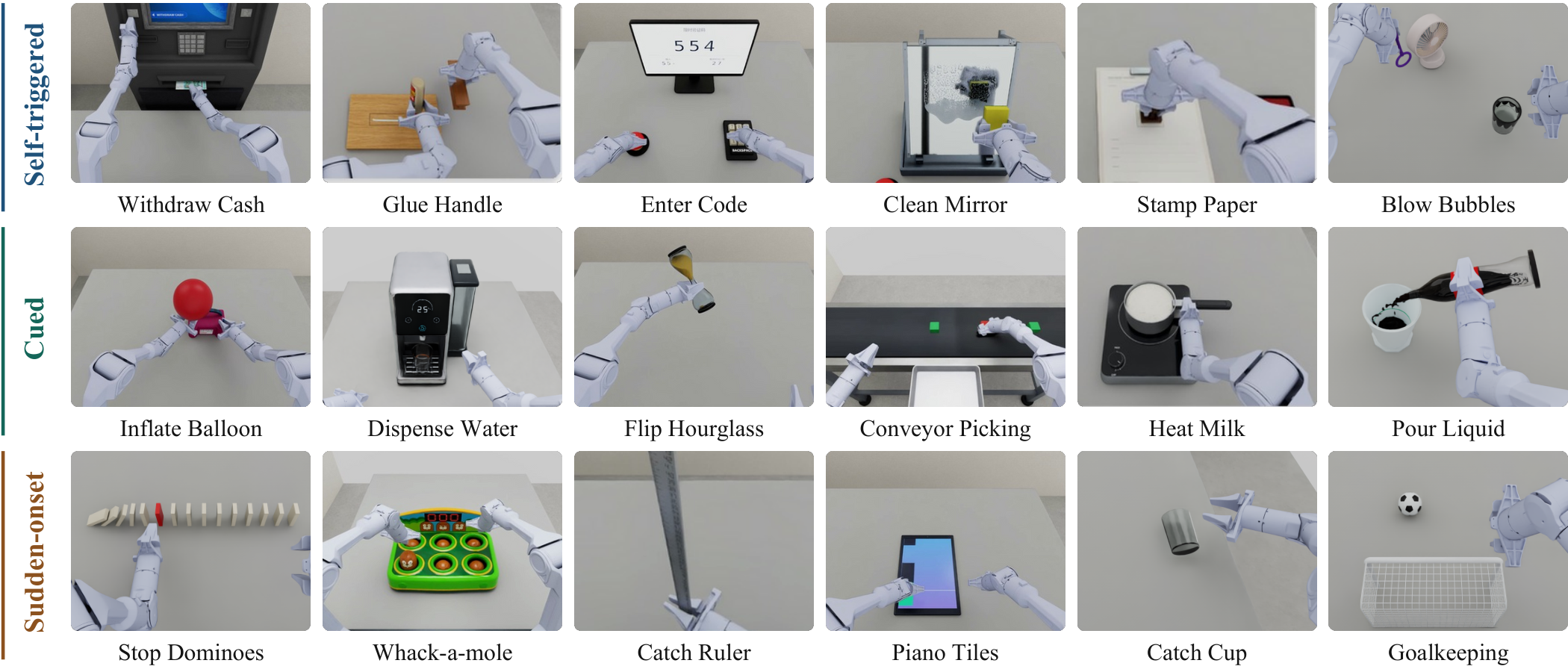
The robot opens the window itself: asking for a code or depositing glue starts the clock.
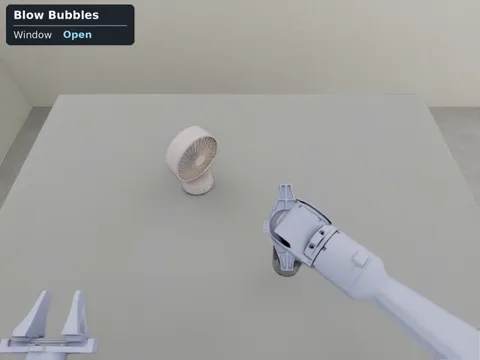
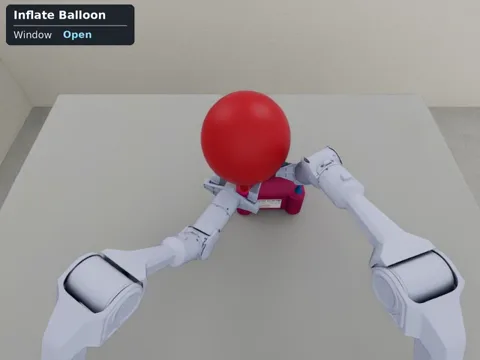
A visible change, such as rising milk or an inflating balloon, helps the robot anticipate the window.
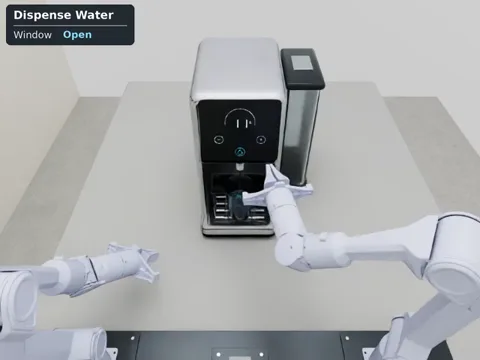
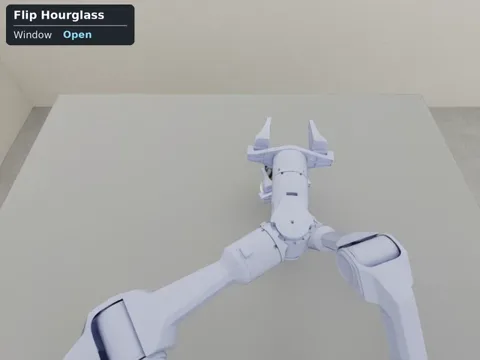
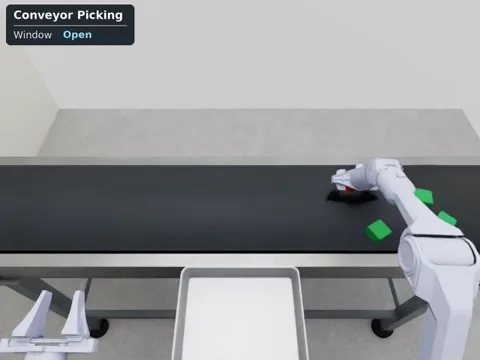
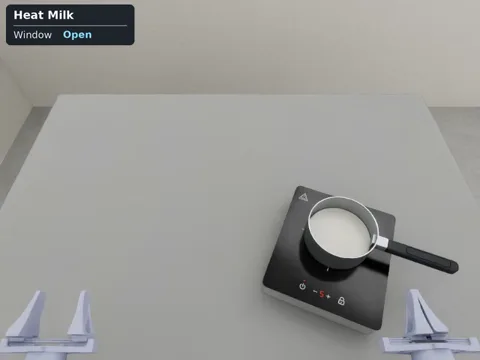
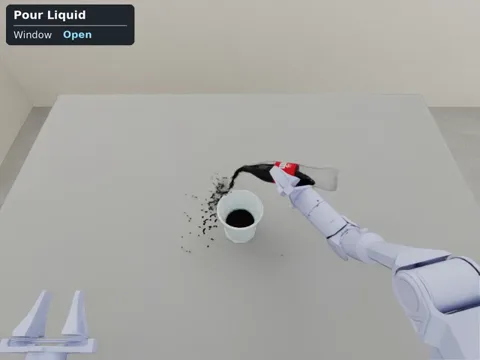
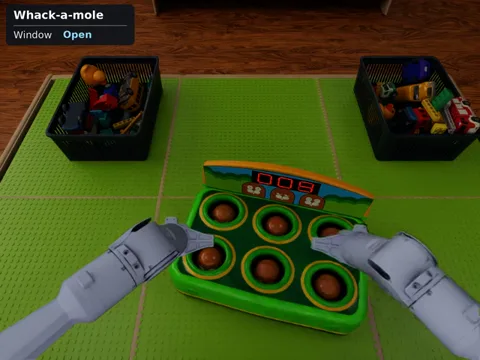
The window opens without a reliable warning. The robot must react once the event begins.
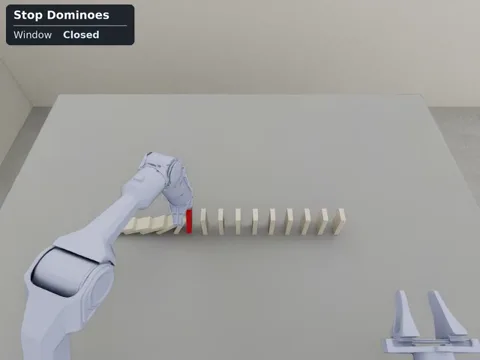
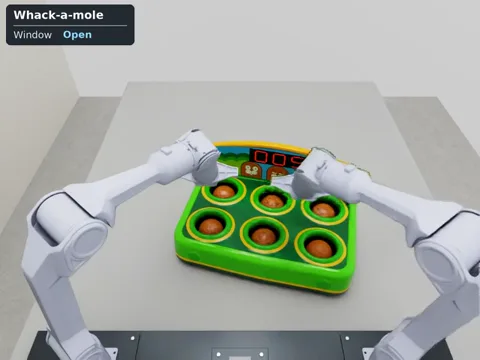
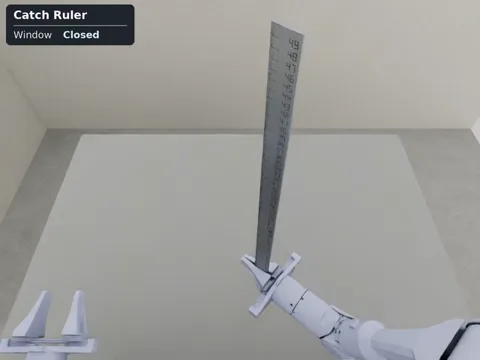
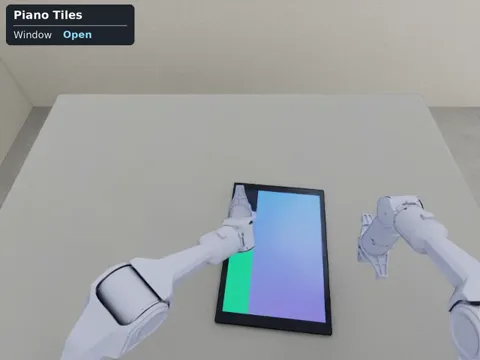
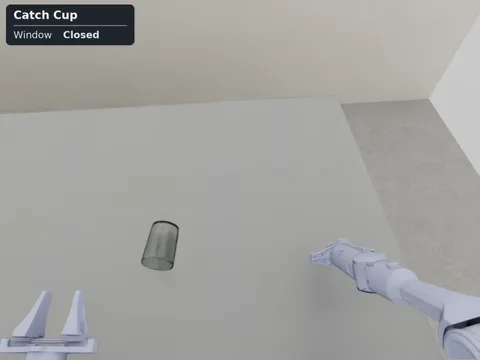
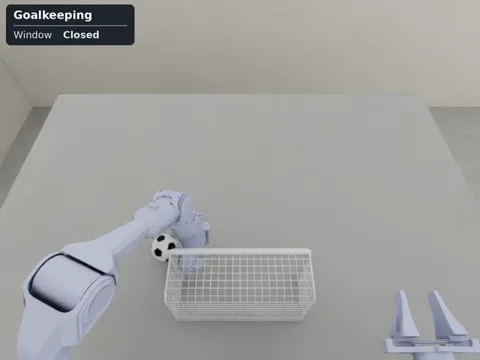
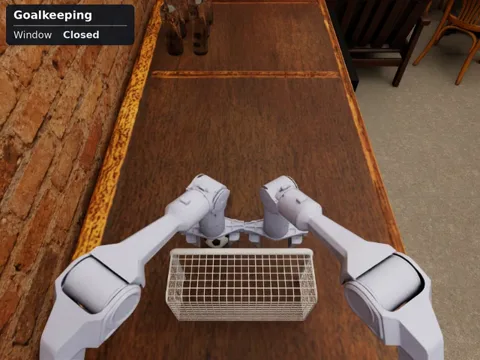
Each scene pairs its task replays with a shared comparison task, Blow Bubbles.
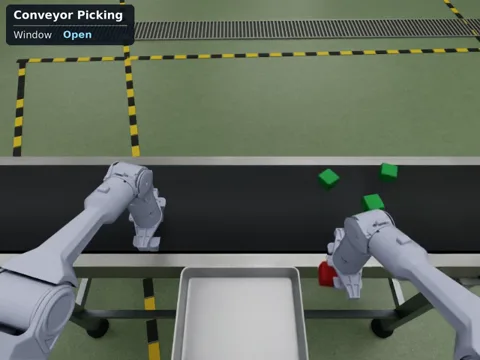
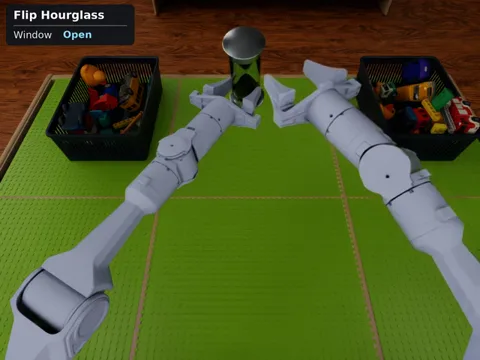
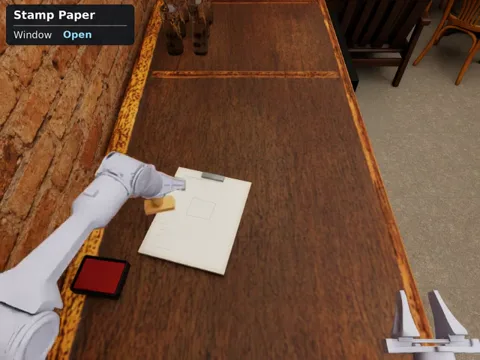
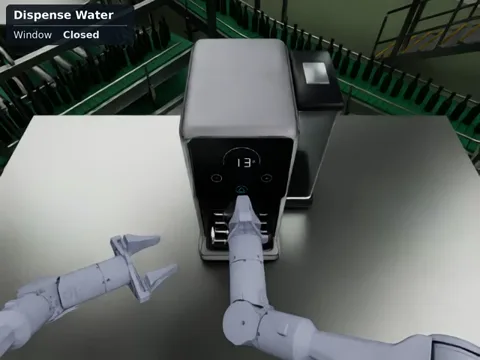
View the task overview figure
Evaluation protocol
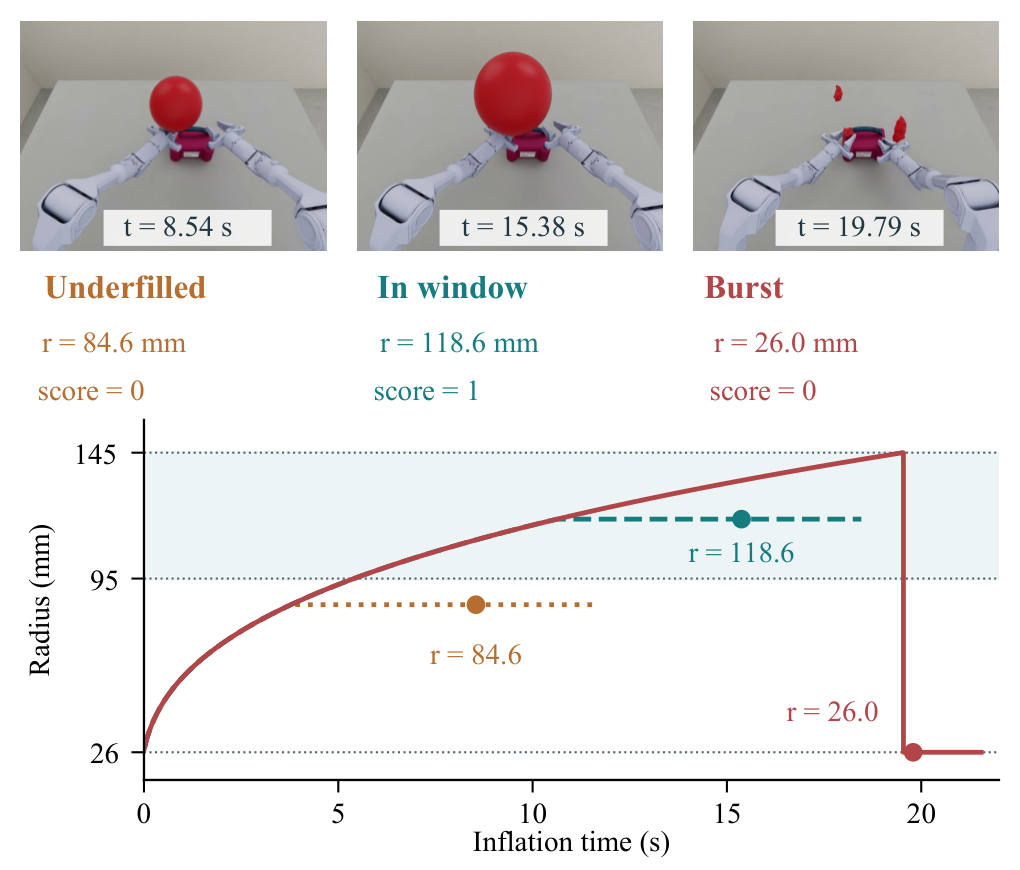
The world keeps moving while the agent decides. A balloon can reach its target size, continue inflating and burst before the next command takes effect.
Measured time. The simulator charges the adjusted real duration of computation divided by a speedup factor, ρ. At ρ = 10, ten seconds of computation cost one simulation second.
Controlled delay. Each high-level decision round costs a fixed τ simulation seconds. In both conditions, the robot continues tracking its previous target and its physical speed limits stay the same.
Results
| Method | ρ = 1 | ρ = 10 | ρ = 100 |
|---|---|---|---|
| Native agent | 0.0 | 23.3 | 46.1 |
| CaP-X | 0.0 | 0.0 | 10.2 |
| PyRUA-Lean | 0.0 | 26.1 | 41.7 |
| Q0-Preview | 0.0 | 13.1 | 44.9 |
With GPT-6.1 Sol, all four methods score zero at measured speed. At 100× computation speedup, Native agent leads with 46.1%.
Human operators using physical teaching arms scored 85.4% at real-time simulation speed.
Faster decisions do not always lead to earlier action. On the same Conveyor Picking instance, a Native agent rollout saved 3.2 seconds of computation but spent 4.4 seconds longer moving between decisions. Its first command to close the gripper came later.
| Method | ρ = 1 | ρ = 10 | ρ = 100 |
|---|---|---|---|
| Native agentGPT-6 Astra / high | 0.0 | 23.5 | 44.4 |
| CaP-XGemini 3.1 Pro / high | 0.0 | 0.0 | 4.3 |
| PyRUA-LeanGPT-6 Astra / high | 0.0 | 36.1 | 50.8 |
| Q0-PreviewClaude Opus 5.5 / xhigh | 0.0 | 12.0 | 43.6 |
With method-specific models, PyRUA-Lean scores highest at both 10× and 100× computation speedup (36.1% and 50.8%).
Human operators using physical teaching arms scored 85.4% at real-time simulation speed.
| Method | <6% | 6% to <20% | ≥20% |
|---|---|---|---|
| Native agent | 50.3 | 40.8 | 10.8 |
| CaP-X | 53.8 | 38.5 | 8.5 |
| PyRUA-Lean | 51.9 | 36.0 | 15.6 |
| Q0-Preview | 61.0 | 34.1 | 7.1 |
As the relative delay increases, the highest score shifts from Q0-Preview to Native agent and then to PyRUA-Lean.
| Method | <6% | 6% to <20% | ≥20% |
|---|---|---|---|
| Native agentGPT-6 Astra / high | 44.2 | 30.8 | 12.6 |
| CaP-XGemini 3.1 Pro / high | 35.7 | 29.5 | 1.9 |
| PyRUA-LeanGPT-6 Astra / high | 62.7 | 39.5 | 21.5 |
| Q0-PreviewClaude Opus 5.5 / xhigh | 47.3 | 28.4 | 7.2 |
With method-specific models, PyRUA-Lean leads in all three delay groups. Its score falls from 62.7% in the lowest group to 21.5% in the highest.
Citation
@misc{zhan2026await,
  title  = {Action Windows Are Inherently Temporal:
            A Benchmark for Time-Sensitive Robotic Manipulation},
  author = {Zhan, Haoxiang and Hong, Haoqin and Zhu, Congcong and Chen, Jingrun},
  year   = {2026}
}